We reply within 48 hours Request a quote +
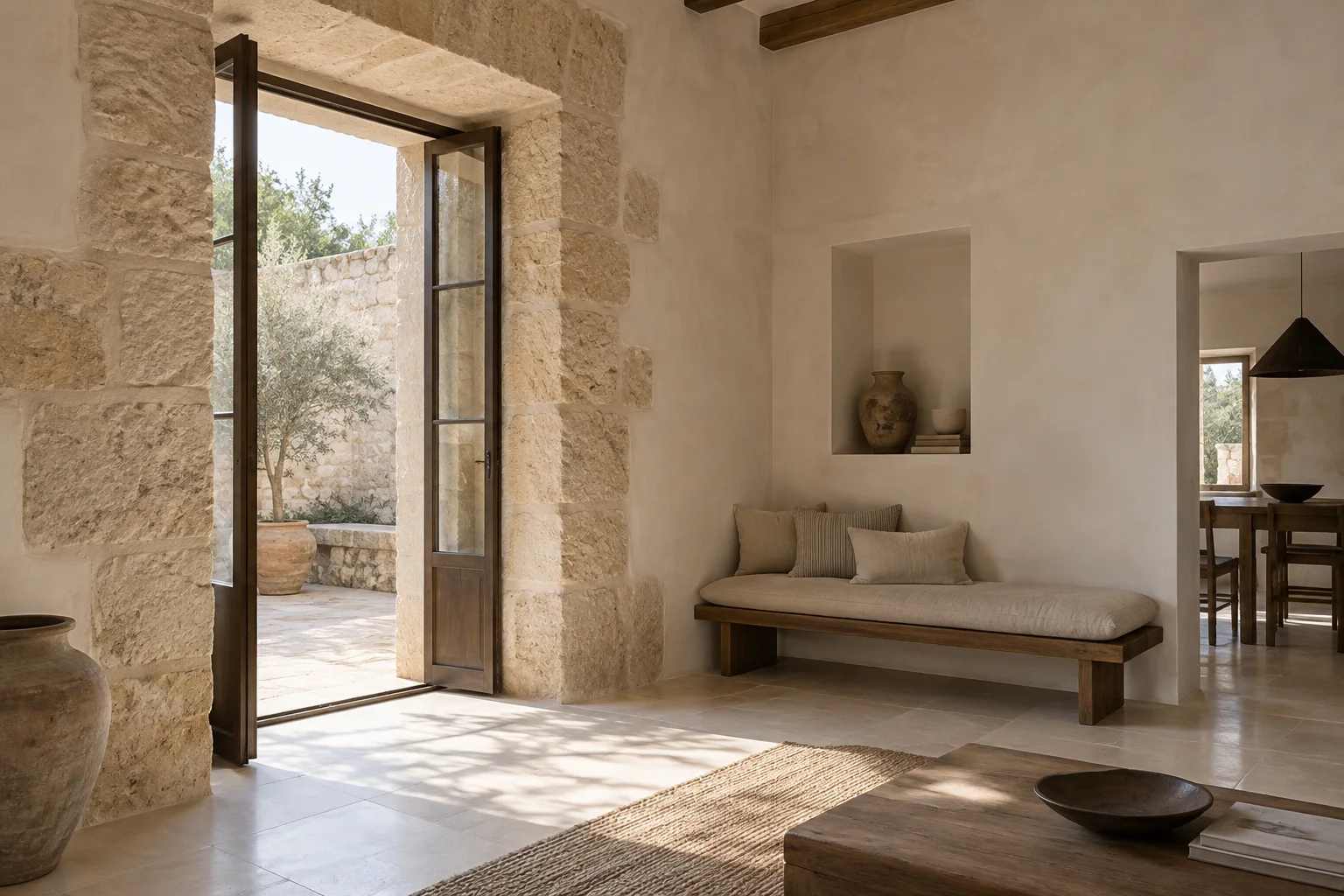
Reference image of a Mallorcan interior with mineral walls and an opening onto a patio
Restore your home’s comfort

Damp treatment in Mallorca

A stain that keeps coming back doesn’t have to become normal. We review damp linked to façades, roofs and terraces and coordinate the repair of the water ingress and the affected elements.

Architecture and construction

Feel comfortable again.
Without covering up the problem.

We deal with damp problems in Palma and across Mallorca, in homes, country houses, buildings and commercial premises. Our work focuses on the construction fix in façades, roofs and terraces; first, a leak has to be distinguished from other causes.

If you’re looking for a damp specialist in Palma de Mallorca, the first step isn’t choosing a machine or a paint: it’s knowing what your property really needs. We explain what has been checked, what still needs verifying and what work we propose.

Meet the Tramuntana team ↗
Materials that deserve care

Restore the wall.
Keep its character.

In a traditional home, solving the source of the damp matters as much as choosing a finish compatible with the wall. The final look is only one part of the work.

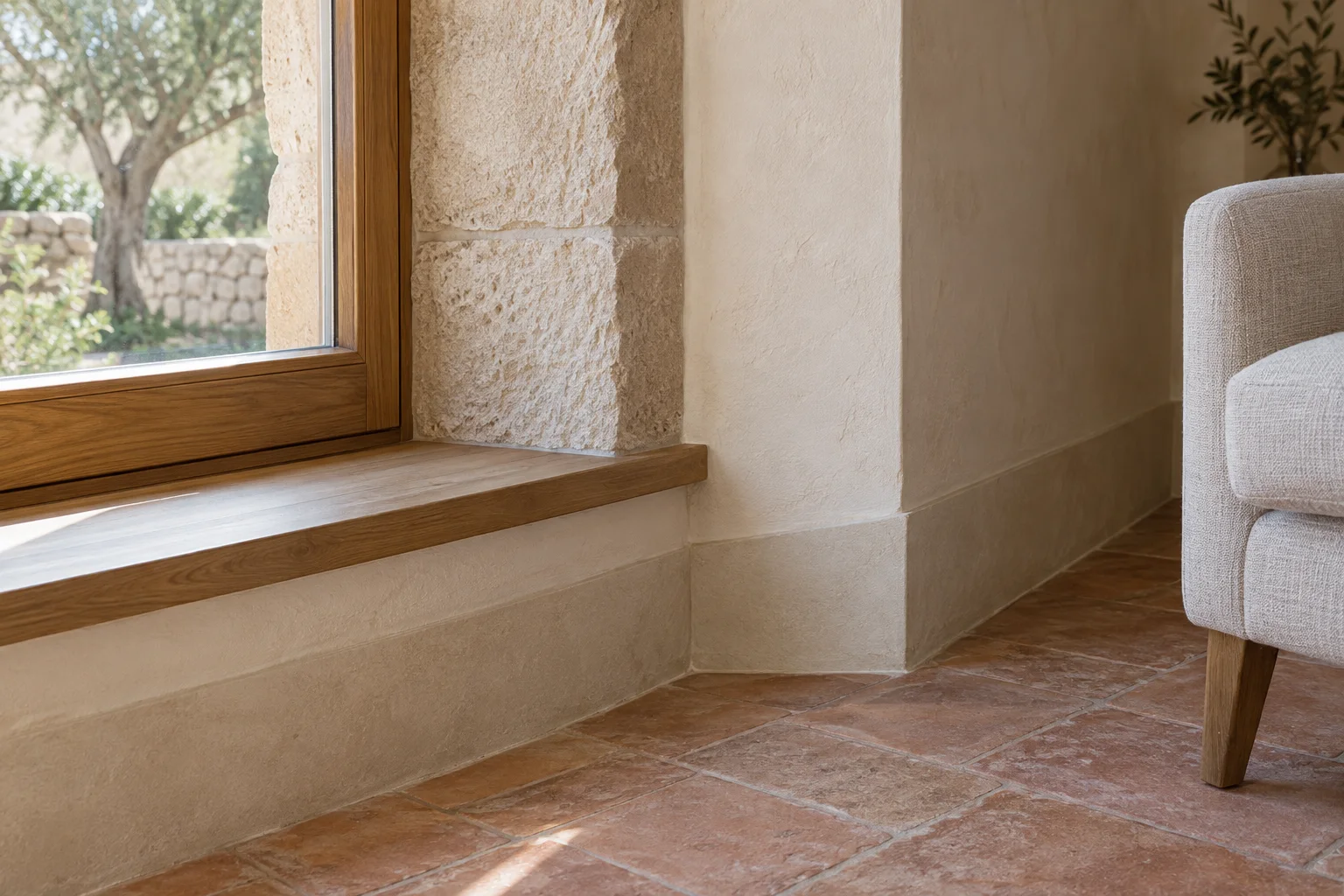
Concept of a junction between a wooden window, mineral wall and terracotta floorStudy concept

Window, wall and indoor comfort

A conceptual reference, not a completed project. Discover what would need studying before working on a real property.

Understand before choosing

Three sources.
Not the same treatment.

Damp treatment depends on how the water arrives: through condensation of indoor vapour, rising from the ground or through a leak. Signs give a direction; a photo alone doesn’t confirm the diagnosis, and several causes can coexist.

01 / Indoor vapour

Condensation damp

Misted windows, cold corners or stains behind furniture can make it worth checking for condensation. Air temperature and humidity are compared with the temperature of the surfaces.

Reviewing ventilation, sources of vapour and cold surfaces helps distinguish this from a leak. The calculation below is a guide: it can’t be used to choose equipment or confirm the treatment.Check with my measurements ↓
02 / Contact with the ground

Rising damp

Water can rise through porous materials. Salts and flaking at the base of the wall are signs that need checking against side leaks, pipe leaks and the condition of the ground and the wall.

The thickness, composition and salts in the wall help distinguish it from a lateral leak or a pipe leak. Before pricing a construction repair, the source must be defined, along with whether specialist checks are needed.Ask about the damp I’ve noticed ↗
03 / Water getting in

Damp from leaks

If the stain changes after rain, it’s worth checking façades, roofs and junctions. If it appears regardless of rain, service leaks or other sources of water also need assessing.

First the entry point is located and fixed; then drying is checked and the finish restored. The entry point may be far from the stain.See waterproofing ↗
Check with your own data

Could your wall
be condensing?

Calculate the temperature at which water vapour in the air would start to condense. You need indoor temperature and relative humidity; if you also measure the wall, you can compare them. No personal data and nothing sent automatically.

Of the air in the room, not the weather forecast. From 5 to 40 °C.
Measured with a hygrometer at the same time. From 10 to 100 %.
Surface temperature, not air temperature. From 0 to 40 °C; reliability depends on the instrument and the material.
What you’ll get

A temperature.
A useful comparison.

Below the dew point, a surface can condense water vapour from the surrounding air. It’s not a “healthy home” rating and doesn’t identify rising damp or leaks.

If you don’t know the wall temperature, we’ll calculate the dew point only and tell you what to measure next.

How to take useful measurements

Use a thermo-hygrometer in the room, let it stabilise and follow its instructions. Don’t replace indoor humidity with the figure from a weather app.

Measure the affected surface with a suitable instrument; infrared thermometers can give unreliable readings on reflective surfaces. Note the time, how the room is being used and whether heating is on, windows are open or it’s raining. Repeat when the problem appears.

Keep general and detailed photos for your enquiry. If you can’t measure, we can help you without that data.

Decisions that avoid repeating the work

Paint, ventilate
or repair the wall?

The finish and treating the source do different jobs. Before investing, it’s worth knowing what each solution does and what it can’t solve.

Mould, paint and finishes

Cleaning doesn’t stop water getting in.

Restoring an affected wall may require removing damaged material, treating the substrate and a compatible finish. An anti-damp paint doesn’t replace fixing a leak or solve rising damp on its own.

In old walls, including marès sandstone ones, the existing layers and their compatibility with the material need studying. Covering up without assessing moisture and salts can leave the problem active behind the finish.

Ventilation and cold spots

Air and wall are studied together.

A dehumidifier can temporarily reduce air humidity, but it doesn’t repair a leak. Ventilation must suit how the home is used and the actual route of air supply and extraction.

If there are cold surfaces or thermal bridges, insulation of the whole and its junctions is assessed. Adding a board without studying how the wall build-up ends up is not a universal solution.

No measurements?

Take a general photo and a close-up; note when it appears, whether it changes with rain and what repairs have been tried. You don’t need to identify the type of damp yourself to ask us.

I’d like you to review my case ↗
Price what’s needed

How much does
damp treatment cost?

There’s no single price per m² for repairing damp. First the water entry point and the scope of the repair must be defined: the visible stain doesn’t on its own measure the work required.

The quote depends on where the water gets in, which elements need repairing and how the finishes are restored. An external joint, an area of roof and a surface that requires lifting paving have different scopes.

Inspection, preparation, materials, ancillary work, waste removal, finishes and taxes should be itemised in the proposal. The solution is chosen after reviewing the property.

Request a quote
Compare these four items
Review of the source
What is inspected, what measurements are needed and whether further checks are required.
Proposed work
System, areas or lengths, access, equipment and ancillary work. With its exclusions.
Interior restoration
Repairs, salts, drying, wall finishes and decoration. Not to be confused with correcting the cause.
Follow-up and conditions
Checks, subsequent use, the specific guarantee and taxes. No identical promises for every case.

From enquiry to restoration

A clear intervention.
From start to finish.

We coordinate the checks and construction repair of façades, roofs and terraces. The scope is agreed for your property; a design, an expert report or permit applications are not automatically included.

  1. 01

    Listen and check

    We review the symptoms, conditions of use and affected elements. If the source isn’t clear, we define what needs checking before settling on the solution.

  2. 02

    Define the work

    You receive a proposal with work, limits and conditions. In an occupied home, access, protection of rooms and restrictions on use are planned.

  3. 03

    Carry out and review

    The cause is dealt with and restoration of the substrate is coordinated. Drying times and checks are assessed before the finish is considered complete.

Before deciding

Questions about damp.

How do I know if it’s condensation, rising damp or a leak?

Where and when it appears help guide the review, but aren’t enough to confirm the cause. Cold surfaces and indoor vapour, contact with the ground and salts, rain ingress and possible service leaks are all studied. There may be more than one source in the same room.

Does anti-damp paint get rid of the problem?

It can be part of the finish when it suits the substrate and the work, but it doesn’t replace correcting the source. If water is still getting in or condensation continues, repainting can hide the symptom without solving the problem. First the cause is defined, then the wall is restored.

Can I tell if a wall is condensing with a hygrometer?

A hygrometer, together with air temperature, lets you estimate the dew point. To compare it with a wall, you also need to measure its surface temperature. A single reading doesn’t diagnose the source of a stain or rule out other problems; it’s worth repeating the measurements in the conditions when it appears.

Can damp be treated in an occupied home?

It depends on the work. Areas may need clearing, finishes protecting and use of some rooms temporarily restricting. Work on walls, ventilation or waterproofing has different effects and timeframes. Phases and occupancy conditions are agreed in the proposal.

How long does a wall take to dry after treatment?

There’s no universal timeframe. The thickness and material of the wall, the amount of water, salts, ambient conditions and whether the moisture source has been stopped all play a part. Drying and finish compatibility are checked before refinishing; completing the repair doesn’t mean the wall is immediately dry.

Do you deal with damp in Palma, country houses and communities of owners?

Yes, we cover Palma and the rest of Mallorca: homes, country houses, buildings and commercial premises. If communal elements are affected, the review and work are coordinated with the owners’ representatives. It’s a refurbishment and construction service, not regular maintenance for communities.

Let’s talk
Shall we talk about your project?

Tell us where the damp appears and since when. Let’s start by understanding your property.