We reply within 48 hours Request a quote +
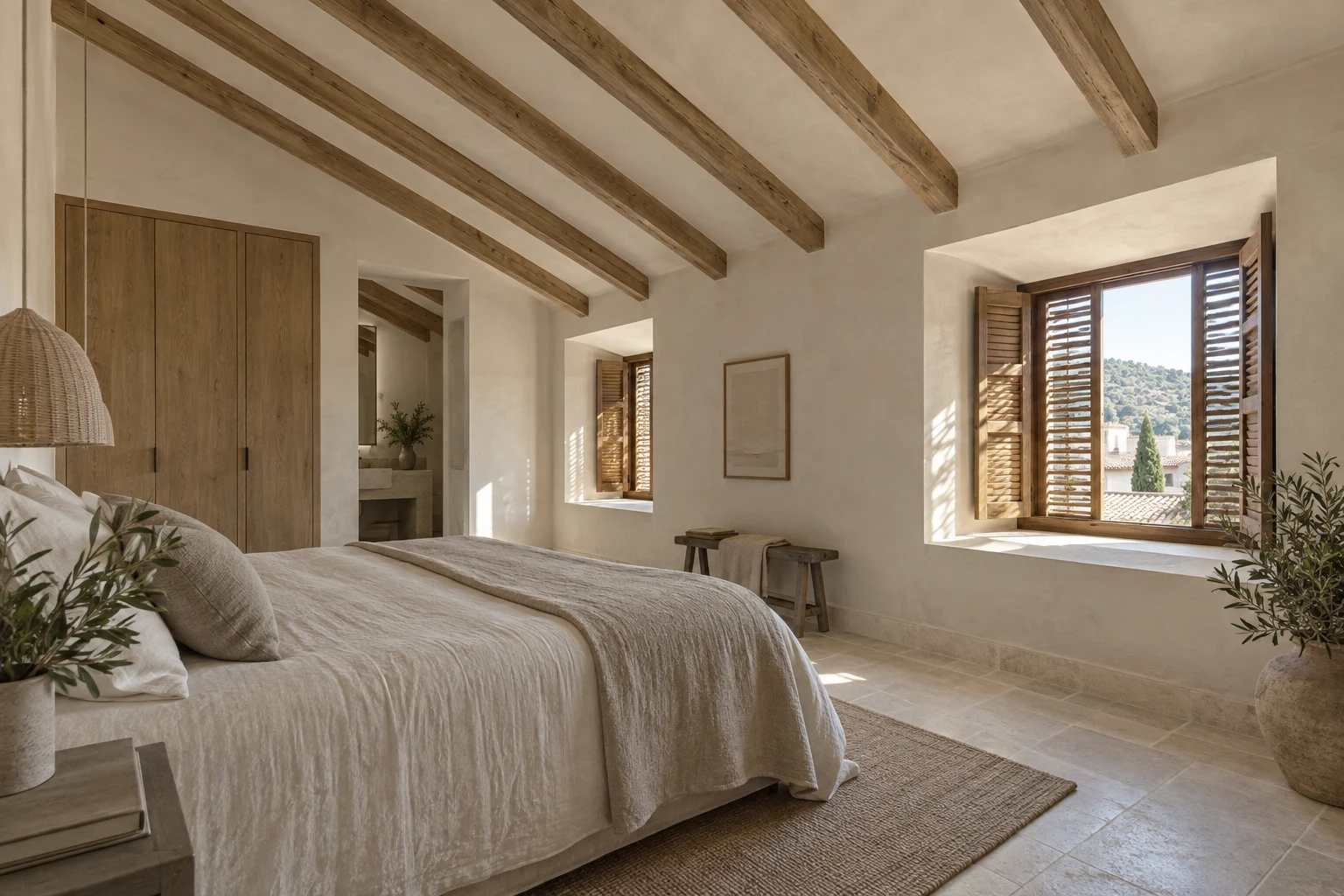
Concept of a Mallorcan bedroom under the roof, with mineral walls and wooden shutters
A home that’s better to live in

Thermal insulation in Mallorca

We improve the thermal insulation of roofs, coordinating their layers, junctions and finishes with the refurbishment of the home. The solution starts from the property and what you need to improve.

Architecture and construction

The temperature changes.
Your home can respond better.

We carry out thermal insulation work on roofs in Palma and across Mallorca. Before choosing a material, we review the roof layers, the existing insulation and the junctions with the rest of the building.

The condition of the roof and its access determine how to intervene. We help you set priorities and coordinate insulation with water protection, services and the finishes that are kept or renewed.

Meet our team ↗
Comfort is designed too

Living under the roof.
Keeping its character.

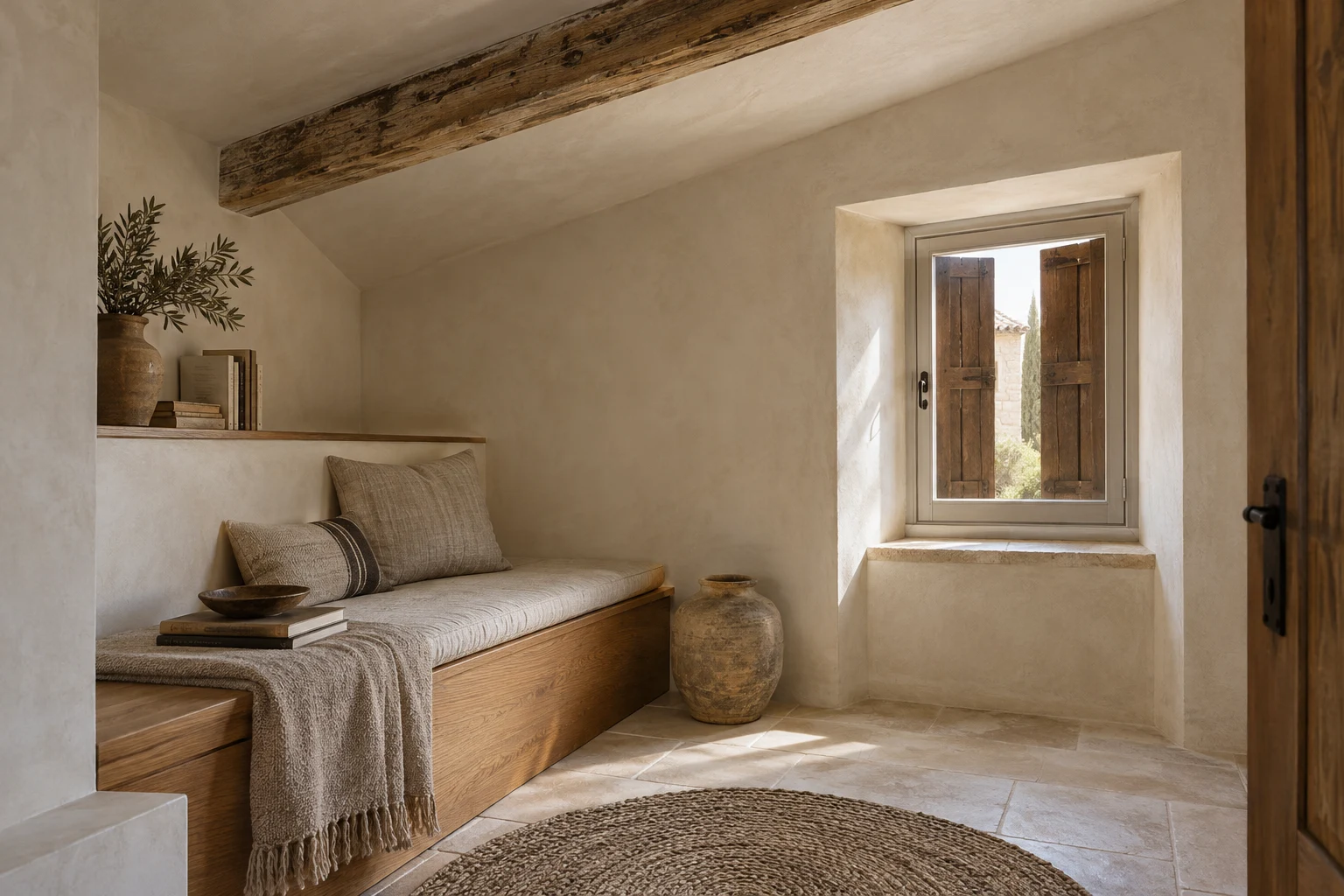
The junction between ceiling, wall and window shapes both the work and the finish. This concept shows a design intention; in a real home, the layers and hidden details would need studying.

Concept of a reading nook under the roof with a deep window and natural finishesStudy concept

A retreat under the roof

A conceptual reference, not a completed project. See the approach and the points that would need checking.

Choosing from your home

Layers, continuity.
And well-resolved junctions.

There’s no universal insulation for every roof. We review what exists and how the thermal improvement fits with the planned work before defining materials and thicknesses.

01 / The starting point

Condition of the roof

What layers there are, what has been repaired before and what can be kept. The substrate and water protection must be reviewed before adding insulation.

Improving comfort and repairing the roof are related decisions, but they aren’t the same line item.See roofs ↗
02 / Beyond the material

Continuity of insulation

Changes of plane, openings and junctions with walls are part of the solution. Material, thickness and layers are defined for the whole, not just for a central surface.

If working from inside is being considered, headroom, beams, services and finishes need reviewing.Prepare my roof priorities ↓
03 / Coordinated work

Junctions and finishes

Insulation is coordinated with waterproofing, drainage and covering. Each layer has a job and needs junctions compatible with the others.

A leak requires checking its source: adding insulation doesn’t replace that repair.See waterproofing ↗
Prepare the improvement

Your roof.
The right questions.

Tell us what you notice under the roof and what you’d like to keep. You’ll get the checks and information worth gathering before defining the insulation.

To prepare an assessment, gather what you know about your roof: type, areas where you notice cold or heat, and whether you’re already planning to renovate it. You don’t need to choose a material or climb onto the roof.

Ask about my roof
Comfort under the roof

Where to start
to notice the difference?

We start from what you notice and check it against the building. Sun, air leakage and how rooms are used can weigh as much as the existing insulation.

Top floor / roof

Heat comes from above.

In attics and houses under the roof, the roof layers, existing insulation and its continuity are reviewed. If working under the ceiling is considered, headroom, junctions and services are checked.

When the roof is also deteriorated, it’s worth coordinating the thermal improvement with its renewal, without confusing insulation with waterproofing.

See roofs ↗
Openings / sun / air

The window is part of the whole.

Glass, frame, shutter box and sealing of junctions are reviewed. In summer, controlling the sun before it passes through the glass is different from insulating a wall.

A more airtight home also needs adequate ventilation. Changing windows without coordinating air renewal and the building envelope can leave problems unsolved.

Continuity / junctions

What joins the layers counts too.

Parapets, openings, walls and service penetrations need details compatible with the roof. We review where the insulation could be interrupted and how each junction is resolved.

The decision must coordinate water protection, thermal performance and finish, without covering up damage still to be resolved.

Material / thickness / detail

Compare systems, not just names.

Mineral wool, EPS, XPS and other insulation materials have different applications and performance. Conductivity, thickness, fire behaviour, water and vapour behaviour and compatibility with the complete system are compared.

Good thermal insulation doesn’t on its own provide sufficient acoustic insulation. If there is also noise, its source and how it travels must be studied.

A well-defined investment

How much does it cost
to insulate a home?

The quote starts from the actual roof area, its layers and the scope of the work. Adding insulation while renewing the roof doesn’t cost the same as opening up and reinstating elements to work on an existing roof.

The home’s floor area isn’t always the same as the roof area. Access, removals, thickness, preparation and reinstatement of finishes should be listed in the proposal.

The quote should clarify measurements, layers, junctions, scaffolding and equipment, and taxes. Work on the structure or waterproofing isn’t assumed to be included: it’s defined according to the condition of the roof.

Request an assessment
What to compare in the proposal
Area and system
What roof area is treated, how it’s measured and what layers are installed.
Total thickness
Insulation, structure, boards and finish. Also the effect on openings and headroom.
Junctions and ancillary work
Parapets, openings, service penetrations, removals and reinstatement.
Performance and conditions
Documentation of the solution, checks, timeframe, exclusions and taxes.
From problem to construction

Decide with information.
Build with continuity.

We explain what work makes sense, how it affects your home and what details must be resolved before the finishes are closed up.

  1. 01

    Review the home

    Rooms that overheat or get cold, orientation, windows, roof, damp and existing insulation. Your observations help prepare the visit.

  2. 02

    Compare alternatives

    Scope, materials, thicknesses and impact on use. If you’re already renovating, we coordinate the work to make the most of it.

  3. 03

    Install and check

    The installation and continuity of the system and its junctions are reviewed before covering it. The handover includes the conditions of use and the agreed documentation.

Before deciding

Questions about thermal insulation.

Does insulation also help with summer heat?

Yes: it reduces heat exchange through the elements treated. The result also depends on sun coming through the windows, ventilation, how the home is used and the equipment. In a very sunny room, insulation and solar protection may need combining; we don’t promise a fixed indoor temperature.

Is it better to insulate from inside or outside?

On a roof it depends on its layers, access and what is going to be kept or renewed. Working from inside can affect headroom, beams and services; doing it while renewing the covering requires coordinating all the layers. The alternatives are studied for the specific roof, not as a universal ranking.

What needs checking when working from inside under the roof?

Headroom, the build-up of layers, beams you want to keep exposed, services and junctions with walls and openings must be considered. Thickness isn’t chosen just by the space available: the solution requires checking how the whole performs and defining its finishes.

Can an existing house be insulated without a full renovation?

Work focused on the roof can be studied without automatically turning it into a full renovation. Its layers, condition and junctions determine what needs opening up or reinstating. Before deciding, we explain the scope, protection of the home and the limitations of working on only one part.

Does insulation get rid of damp and noise?

Not automatically. It can improve the temperature of cold surfaces if designed correctly, but ventilation and condensation must be studied. Leaks and rising damp require correcting their source. For noise, the complete system, the junctions and the transmission paths all count; thermal performance isn’t the same as acoustic performance.

How much can I save on heating and air conditioning?

A percentage can’t be set from the floor area alone. It depends on the starting condition, the scope of the work, the equipment, the climate and how you use the home. Estimating it requires data on the property and an energy calculation. The planner on this page organises your enquiry; it doesn’t calculate bill savings or energy certification.

Let’s talk
Shall we talk about your project?

Tell us which room you don’t enjoy as much as you’d like. Let’s start with your home, not a ready-made solution.