
Remove the building
We define the whole area affected, its relationship with neighbouring buildings and the condition the site must be left in. Foundations, buried services or subsequent work must be explicitly included in the scope.
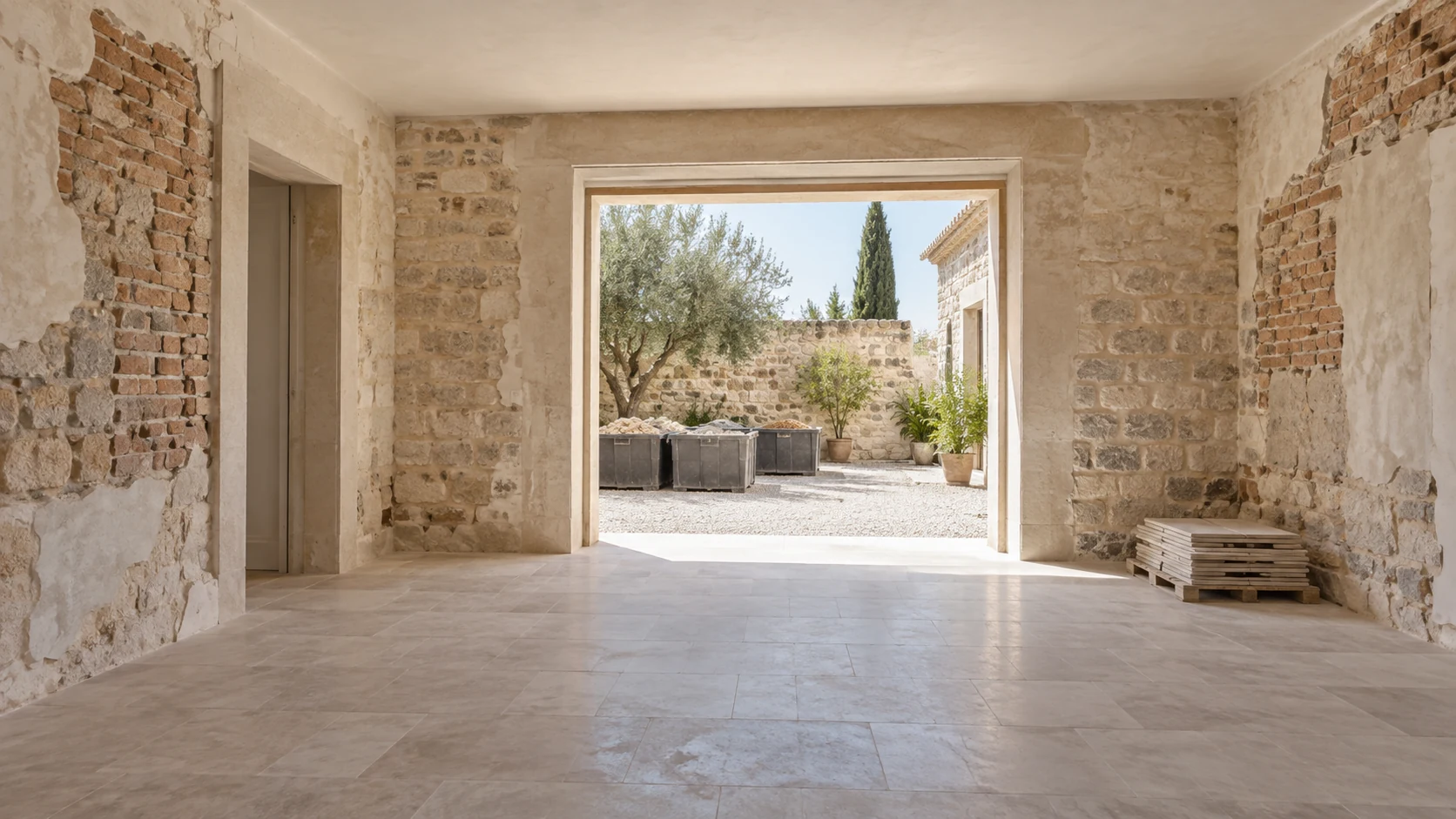 AI-generated conceptual image; not a completed project.
A demolition starts by defining its limits. We study what is removed, what must be kept and how the work relates to the property and its surroundings. We coordinate documentation, permits and execution according to the agreed scope.
In homes, commercial premises and other private buildings, the engagement needs to describe the elements affected, the parts that remain and the result of the work. A visit and the available background let us define those decisions.
We can integrate the demolition into a 360° architecture project or coordinate a specific scope with your architect or builder. Excavation and subsequent site preparation are defined as additional work when needed.
The proposal adapts to what you need to remove and the condition of what exists. The method is set by the technical study of the work.
We define the whole area affected, its relationship with neighbouring buildings and the condition the site must be left in. Foundations, buried services or subsequent work must be explicitly included in the scope.
We study the connections between the elements removed and those that remain. Keeping the structure, façade or areas in use requires checking the impacts and defining the conditions of the work.
Removal of partitions, finishes or other elements set out in the engagement. Its technical and planning scope is checked before work starts: being inside a building doesn’t mean an element can be removed.
Defining the work brings together information about the property and the conditions for access, the work itself and handling the materials.
Plans, use, previous work and planning status. The permit, technical documentation and any protections or concurrent authorisations are reviewed.
Retained parts, party walls, nearby buildings and services. Impacts are coordinated, along with the relevant technical and health and safety roles.
Entry, working space and removal of materials. We also agree what cleaning, closing up and documentation are part of the handover.
Reference (in Spanish): permits and planning control · LUIB.
Tell us what the proposal says about these six items. You’ll get questions to clarify exclusions and anything not mentioned, plus details worth checking in what is included.
This list helps you review a proposal. It doesn’t validate its content or imply that every item is necessary or must be contracted together. How it applies depends on the work and the agreed engagements.
Before accepting a demolition quote, check how it handles these points:
Distinguish what is included, excluded and not stated. Ask for clarification on scope and responsibilities; an item listed as included doesn’t on its own prove that it is defined.
Ask about my quoteCheck the fields indicated to see the questions and summary again.
You haven’t marked any items as “Not stated”.
You haven’t marked any items as “Excluded”.
You haven’t marked any items as “Included”.
A partial demolition keeps part of the building. Selective demolition focuses on separating materials, even when a whole building is removed.
Waste forecasting, sorting, transport and destination are organised from the start. The handover should include the corresponding waste management certificates.
See (in Spanish): construction and demolition waste.
The quote distinguishes technical work, execution, equipment, transport, waste management and completion. Exclusions and open questions must be identified.
Visit, gather background and check what is to be removed and kept.
Define the scope, line items, documentation and permits needed to start.
Organise the work with those responsible and record agreed changes.
Check the final condition and gather the certificates and documents included in the engagement.
Yes, as long as technical and planning checks allow that work. The affected elements and their relationship with the retained parts are defined. The proposal must set out the conditions and responsibilities needed to carry out that scope.
As a general rule, Balearic planning law (LUIB) makes total or partial demolition subject to a municipal permit and excludes it from prior notification, with its own specific cases. We review the applicable file, the design or technical documentation and any heritage or sector-specific impacts.
Its identification and specific treatment are coordinated before defining the affected work. Work subject to asbestos regulations is carried out by a company registered with RERA under the corresponding approved work plan. It is not treated as ordinary rubble.
The scope should clarify sorting, loading, transport, destination and management, as well as the certificates provided. Hazardous materials require separate handling. It’s worth checking that the quote covers these tasks, not just transport.
The elements affected, what is kept, access, nearby buildings and the materials involved. The documentation and the contracted final condition also play a part. Photos and plans help prepare the visit; measurements, line items and exclusions are then defined.
Not automatically. Demolition and subsequent construction must be assessed under their own conditions and authorisations. Planning rules, protection and the status of the property may restrict the new build. It’s advisable to study both before committing to the demolition.
Tell us where the property is and what you need to remove. Let’s start with a scope you can understand and assess.