Modernising the façade of an old house without losing its character
Two visual proposals for modernising an old façade: what to keep, how to combine finishes and what to check before changing its look.
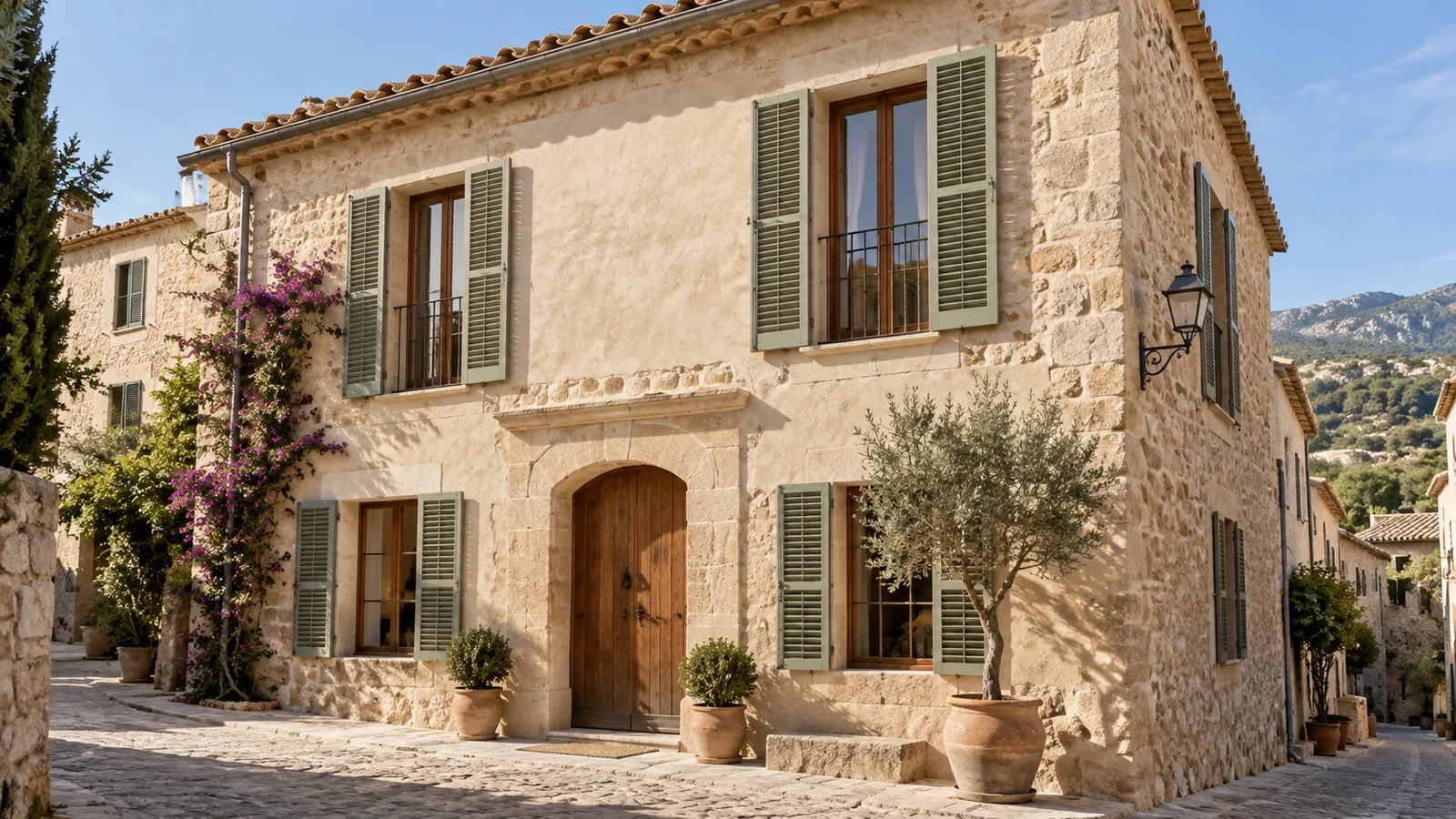
Modernising the façade of an old house doesn’t mean erasing what makes it special. First, distinguish what needs repairing from what you want to change visually. Then work on colour, windows and doors, and details together, respecting the house’s proportions.
Sometimes the change lies in restoring some shutters and tidying visible services. Other times, it’s worth reviewing the render or studying an insulation upgrade. The difference lies in looking at the whole façade, not in choosing a fashionable material to cover it.
The same house, two ways to update it
These drawings keep the volume, roof and openings. Only the visual treatment changes. This lets you compare specific decisions without confusing an attractive image with work that’s already defined.
- Proportions. The openings keep their rhythm.
- Joinery. A single approach unites every piece.
- Materials. The entrance keeps its presence.
Illustrative proposals, not a completed before-and-after or a finish specification. The choice depends on the substrate, the surroundings and the conditions of the house.
What to keep and what to change
Keep what gives identity
Before replacing stone, mouldings, shutters or a door, assess their condition and relationship with the whole. Not everything old deserves keeping, but not everything new improves the façade either. A restored detail can contribute more than adding several finishes.
Reduce visual noise
Cables, units, downpipes, grilles and light fittings compete with the architecture when each follows a different approach. Study how to organise, integrate or refinish them without blocking maintenance, ventilation or drainage. It isn’t about hiding them at any cost.
Choose a family of finishes
Think of background, joinery and details as one composition. If the stone or roof already has strong presence, it doesn’t need to compete with another feature material. Colour is decided next to what stays, not from an isolated sample on a screen.
The street matters too. A façade that works on an isolated plot can look out of place among terraced houses. Look at alignments, heights, shadows and neighbouring façades before deciding how much contrast you want to introduce.
Repair before renewing the look
A crack, a stain or render coming away isn’t solved by choosing another colour. Its cause and the condition of the substrate must be studied. Covering a problem without solving it can compromise the new finish.
Condition and causes of damage.
Repair and compatible materials.
Samples, texture and colour on the house.
With old finishes, it matters what’s underneath and how the wall behaves. We wouldn’t recommend the same treatment from a photo for a stone wall, existing render and a recent repair. The diagnosis guides the solution; the simulation helps choose its look.
The sample worth asking for
Not just a colour chart: a representative sample of the proposed finish on a suitable substrate. Look at it close up and from the street, in light and shade. Check how it meets the stone, shutters and trims. A small texture can have much more presence when repeated across the whole façade.
What if you also want to improve insulation?
It’s a whole-building decision, not another paint option. It changes the external build-up and requires resolving junctions with windows, roof, plinth and boundaries. It’s worth studying before renewing just the finish, to avoid work that later has to be redone.
The right solution depends on the building. An external system may be worthwhile, but it shouldn’t be imposed without checking its technical fit and any applicable restrictions.
Four things to prepare before deciding
FOR THE FIRST VISIT
- An overall photo and details of what concerns you, taken from a safe spot.
- The municipality and address: possible protections and planning conditions need checking.
- What you want to keep and two or three references, explaining what you like about each.
- The planned work: façade only, windows, roof or a broader refurbishment.
With that information we can separate aesthetic preferences, necessary repairs and decisions still to be checked. If the property is protected, changing materials, openings or colour shouldn’t be assumed to be allowed without reviewing its conditions.
Questions about modernising an old façade
Is painting enough to modernise it?
It may be enough to update its look if the substrate is in good condition and the finish is compatible. It doesn’t replace repairing damage or, on its own, improve every aspect of the wall.
Does the stone have to go to achieve a contemporary style?
No. It can be integrated with calmer joinery and finishes. First assess its condition and whether it’s an element worth keeping, rather than treating it as an obstacle because it’s old.
Can the size of the windows be changed?
It isn’t a simple aesthetic choice. Structure, composition, possible protections and applicable requirements must be checked. The drawings in this guide keep the openings precisely to compare looks without assuming that work.
If you’re considering the work in Mallorca, we can help you distinguish what to repair and what to renew through our façade refurbishment service. The idea is to update the house with a common approach, not pile up changes that won’t fit together.